If you are weighing plantation shutters vs blinds for your Tucson home, you are really asking one question: which one gives you the best value in our desert? You want something that looks great, blocks the harsh sun, and is worth the money you spend. Both choices can do the job. They just do it in different ways, and the right pick depends on your rooms, your budget, and how long you plan to stay in the home.
This guide comes from Matt at Love is Blinds AZ, a custom window treatment company serving Tucson, Oro Valley, Marana, the Catalina Foothills, Sahuarita, and Green Valley. Matt has measured and installed coverings in hundreds of Southern Arizona homes, so he knows what holds up in the Tucson-area heat. Below he answers the questions homeowners ask most about plantation shutters in Tucson and how they stack up against blinds. When you are ready, browse the full products hub or schedule a free in-home consultation and compare samples in your own light.
What Is the Real Difference Between Plantation Shutters and Blinds?
Plantation shutters are solid panels with wide louvers that mount right into your window frame. They become part of the house, almost like a built-in piece of furniture. You tilt the louvers to control light, and you can swing the panels open when you want a clear view.
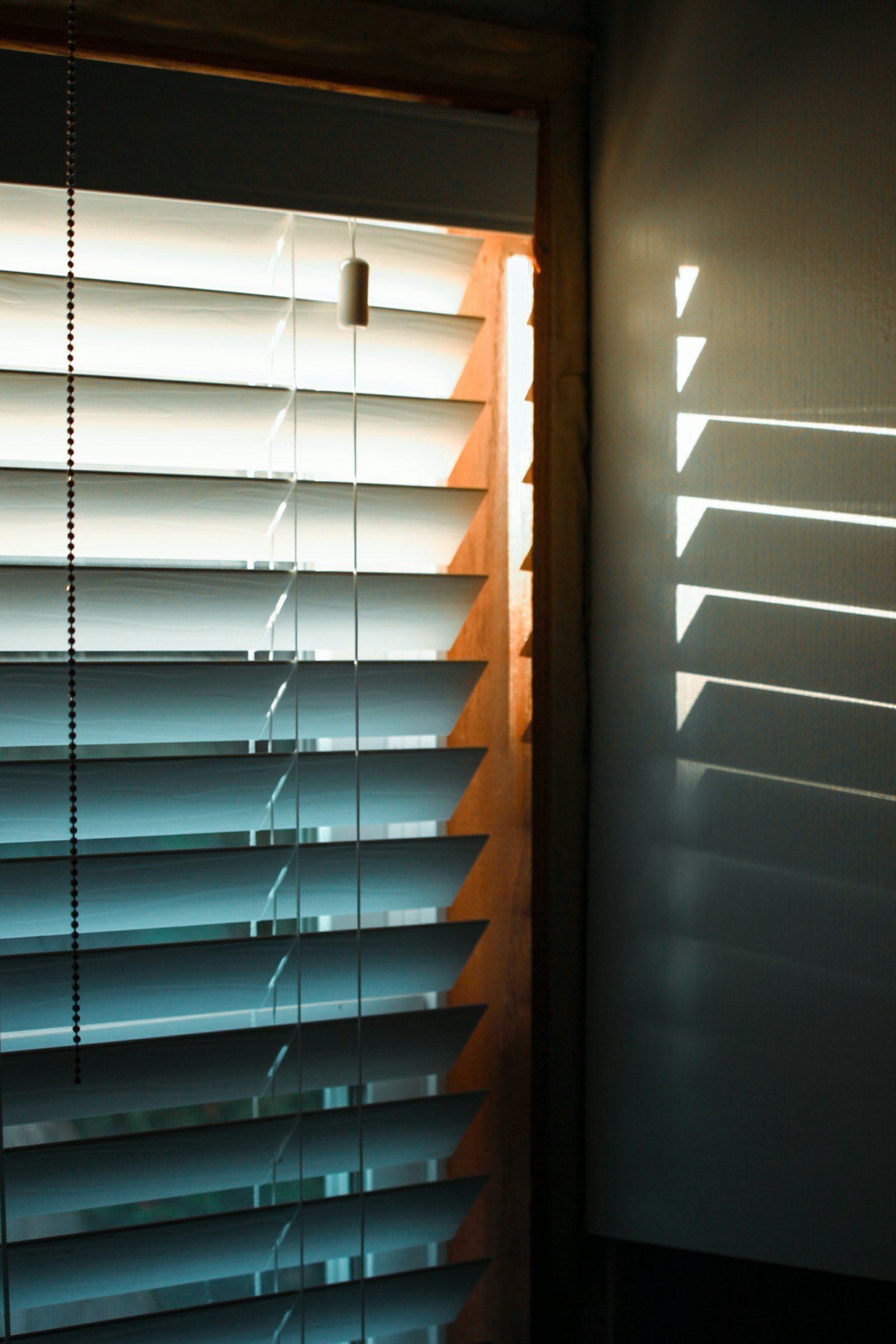
Blinds are lighter coverings that hang inside or above the window. They raise and lower with a cord or wand, and the slats tilt to let in light or shut it out. You can find them in faux wood, real wood, aluminum, and vinyl. Blinds cost less up front and come in more styles, while plantation shutters cost more but last longer and look more finished.
How Much Do Plantation Shutters Cost in Tucson?
Plantation shutters in Tucson usually run about $200 to $600 or more per window installed. The price moves with the size of the window, the material, and any custom shapes like arches or angles. Larger windows and special frames cost more because they take more material and more careful fitting.
Blinds are easier on the budget. Aluminum and vinyl blinds often run $100 to $150 per window. Faux wood blinds land around $150 to $400, and real wood blinds run about $200 to $600. Most custom window treatments in Tucson fall in the $250 to $450 per window range installed, with installation itself adding roughly $15 to $50 per window. For a full breakdown, see our guide on how much custom blinds cost in Tucson.
Which One Holds Up Better in the Arizona Desert Sun?
This is where plantation shutters in Arizona really shine. Quality shutters are built to handle heat without warping, cracking, or fading. The thick louvers also add a layer of insulation between the glass and your room, so they help keep the afternoon heat out. That matters a lot on west and south windows that take the worst sun.
Blinds hold up well too, as long as you pick the right material. Faux wood blinds resist heat and moisture far better than real wood, which can crack or warp in our dry climate. Cheap vinyl can sag in extreme heat, so for sunny rooms it pays to choose a sturdy faux wood or a quality shutter. Picking the wrong material is one of the top window treatment mistakes people make in hot, dry climates.
Which Choice Gives Better Long-Term Value?
Value is more than the sticker price. Plantation shutters cost more at first, but they can last for decades and rarely need repairs. They never need re-stringing, they wipe clean of desert dust in seconds, and they are one of the few window treatments that can add to your home's resale value. For a home you plan to keep, that long life often makes shutters the better deal over time.
Blinds win on flexibility and first cost. If you are on a tight budget, furnishing a rental, or planning to redecorate in a few years, blinds let you cover every window for less. Many homeowners mix both. They put shutters on the front rooms and large windows that guests see, then use blinds in bedrooms, closets, and the laundry room.
Here are the rooms and spots where each choice tends to work best:
- Front living rooms and great rooms: plantation shutters for a clean, built-in look
- West and south windows with heavy sun: shutters or faux wood blinds for heat control
- Bedrooms that need true darkness: blinds paired with honeycomb shades for blackout
- Bathrooms and laundry rooms: faux wood blinds that shrug off moisture
- Sliding glass doors to a patio or pool: roller shades or shutters made for wide openings
- Home offices with screen glare: light-filtering shades or tilted shutter louvers
Are Plantation Shutters or Blinds Easier to Keep Clean?
Dust is a fact of life in the desert, and monsoon winds blow even more of it around. Plantation shutters are simple to clean. You just wipe the louvers with a damp cloth, and they look new again. There are no cords to tangle and no fabric to hold dust.
Blinds take a little more care. The slats catch dust and need wiping one by one, and corded blinds can tangle over time. If easy cleaning is a top concern, shutters have the edge. If you do not mind a quick dusting now and then, blinds are still simple enough for most homes.
Can I Add Motorization to Either One?
Yes. Both shutters and blinds can be motorized, though motorized shades and blinds are the most common choice. With a remote, an app, or your voice, you can raise and lower coverings across the whole house in seconds. This is great for tall windows, hard-to-reach spots, and snowbirds who want their second home to look lived in while they are away.
Motorization adds about $150 to $250 per window. It is worth it for large or high windows and for anyone who wants to set coverings on a schedule. Learn more on our pages for motorized window treatments and window treatment automations.
Do Plantation Shutters or Blinds Lower My Energy Bills?
Both can trim your cooling costs, and that adds up fast during a Tucson summer. The key is a tight fit. When a covering seals the window well, less heat leaks in around the edges, so your AC does not run as hard. Custom shutters and custom blinds are sized to your exact window, which is why they beat one-size-fits-all big-box products.
Plantation shutters often have a slight edge on insulation because of their solid louvers and snug frame. But a well-made faux wood blind, or a blind paired with honeycomb shades, also blocks a lot of heat. We cover the numbers in our post on whether blinds really help lower energy bills in Arizona homes.
Why a Free In-Home Consultation Beats Guessing
June is peak sun season in Southern Arizona, and west-facing rooms can feel like an oven by mid-afternoon. This is the time of year when the right covering makes the biggest difference. The hard part is knowing which product fits which window, and that is tough to judge from a website or a tiny store sample.
That is why Matt comes to you. At your free in-home consultation he brings real samples so you can compare plantation shutters and blinds in your own light, against your own walls and floors. He measures every window himself, so the fit is exact and the heat stays out. There is no guessing and no pressure.
Ready to see what works best in your home? Matt serves Tucson, Oro Valley, Marana, the Catalina Foothills, Sahuarita, and Green Valley. Check the areas we serve and then schedule your free in-home consultation. We will come to you. Call or text Matt at (844) 936-2446 to set a time that works for your schedule.
Frequently Asked Questions
Are plantation shutters worth the higher cost in Tucson?
For a home you plan to keep, yes. Plantation shutters cost about $200 to $600 or more per window, but they last for decades, resist desert heat, and can add to resale value. Over time that long life often makes them a better value than replacing blinds every few years.
Which is cheaper, plantation shutters or blinds?
Blinds are cheaper up front. Aluminum and vinyl blinds run about $100 to $150 per window, and faux wood blinds run $150 to $400. Plantation shutters start higher at $200 to $600 or more. Blinds are the budget pick, while shutters are the long-term investment.
Do plantation shutters block heat better than blinds?
Plantation shutters usually have a slight edge because of their solid louvers and snug frame, which add insulation. But a quality faux wood blind, or a blind paired with honeycomb shades, also blocks plenty of heat. A tight, custom fit matters most for keeping the Arizona sun out.
Can I mix plantation shutters and blinds in the same home?
Yes, and many Tucson homeowners do. A common plan is shutters on the front rooms and large windows that guests see, with blinds in bedrooms, closets, and laundry rooms. Matt can help you mix products room by room during your free in-home consultation.