
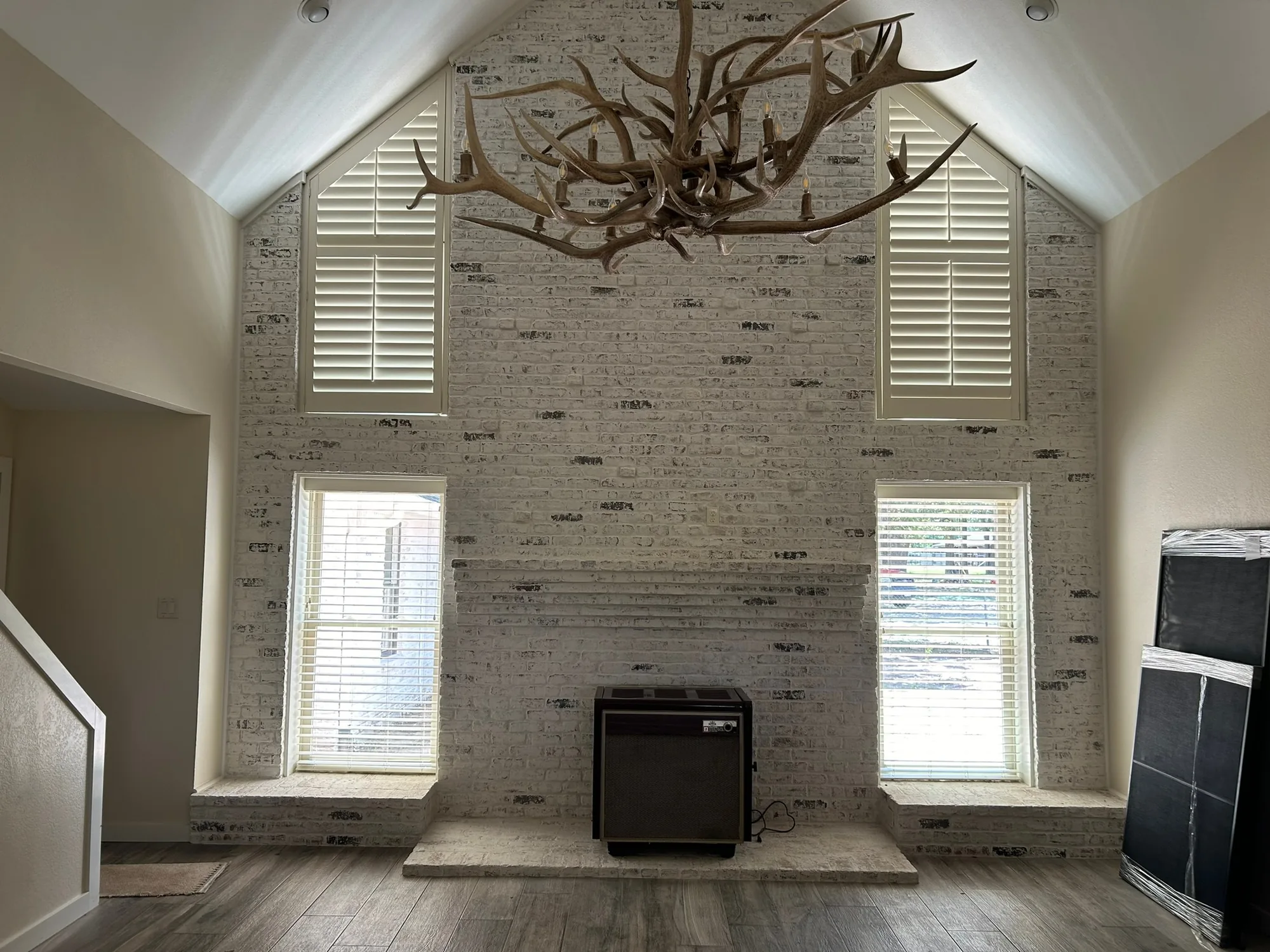
Two ways to hang the same blind
Every blind, shade, and most shutters get installed one of two ways. Inside mount puts the treatment inside the window opening, so it sits flush with the wall like it was built there. Outside mount attaches to the wall or trim above the window, so the treatment hangs over the opening like a picture covering a safe. Same product, very different result, and picking wrong is one of the most common DIY measuring mistakes I fix.
Inside mount: the clean, built-in look
Inside mount is what most people picture when they imagine custom blinds. The headrail tucks into the frame, the slats span the opening edge to edge, and your window trim stays visible around it.
- Looks tailored and intentional, especially with nice trim.
- Keeps the treatment out of the room, so furniture can sit close to the wall.
- Shows off the window frame instead of hiding it.
The catch is that inside mount has requirements. The opening needs enough depth for the headrail to sit inside it, the frame needs to be reasonably square, and there can be nothing in the way, like a crank handle on a casement window or an alarm sensor. Windows also let a thin line of light pass along each side of an inside mounted treatment, because the fabric or slats have to clear the frame to move.
Outside mount: coverage and camouflage
Outside mount trades the built-in look for control. Because the treatment hangs over the opening rather than inside it, you decide how far it extends past the glass on every side.
- Blocks more light, since the treatment overlaps the opening instead of fitting inside it.
- Works on shallow openings, cranks, tile returns, and frames too out of square for inside mount.
- Can visually fix a window: mounted high and wide, it makes a small or awkward window read taller and grander.
- The only real option for most sliding doors and many arched or odd openings.
The tradeoffs are the mirror image of inside mount: the treatment covers your trim, projects slightly into the room, and the headrail is more visible unless you add a cassette or valance to dress it.
How to choose, window by window
This is not a whole-house decision. Mix mounts freely based on what each window needs.
- Bedrooms where darkness matters: outside mount, or inside mount with a fabric that handles the edge light, like we covered in blackout shades with side tracks.
- Living areas with pretty trim and deep frames: inside mount for the tailored look.
- Kitchens and baths with tile into the opening or shallow frames: usually outside mount.
- Sliding doors: outside mount, almost always.
Measuring is where this goes wrong
Inside and outside mounts are measured differently, and the rules are unforgiving. Inside mount needs the opening measured at multiple points because frames are rarely perfectly square, and the depth checked against the specific product, since every blind and shade needs a different amount of room. Outside mount needs overlap decisions made before ordering. Order an inside mount blind a half inch wrong and it either will not fit or rattles in the opening with a light gap you cannot fix.
This is why measuring is part of the job when you work with us. Matt Diaz checks depth, square, and obstructions on every window, recommends a mount for each one, and the fit is on us, not on your tape measure. See how the process works on our window treatment installation page.
Want every window measured right the first time? Reach out through our contact page or call (844) 936-2446 to book your free in-home consultation.