
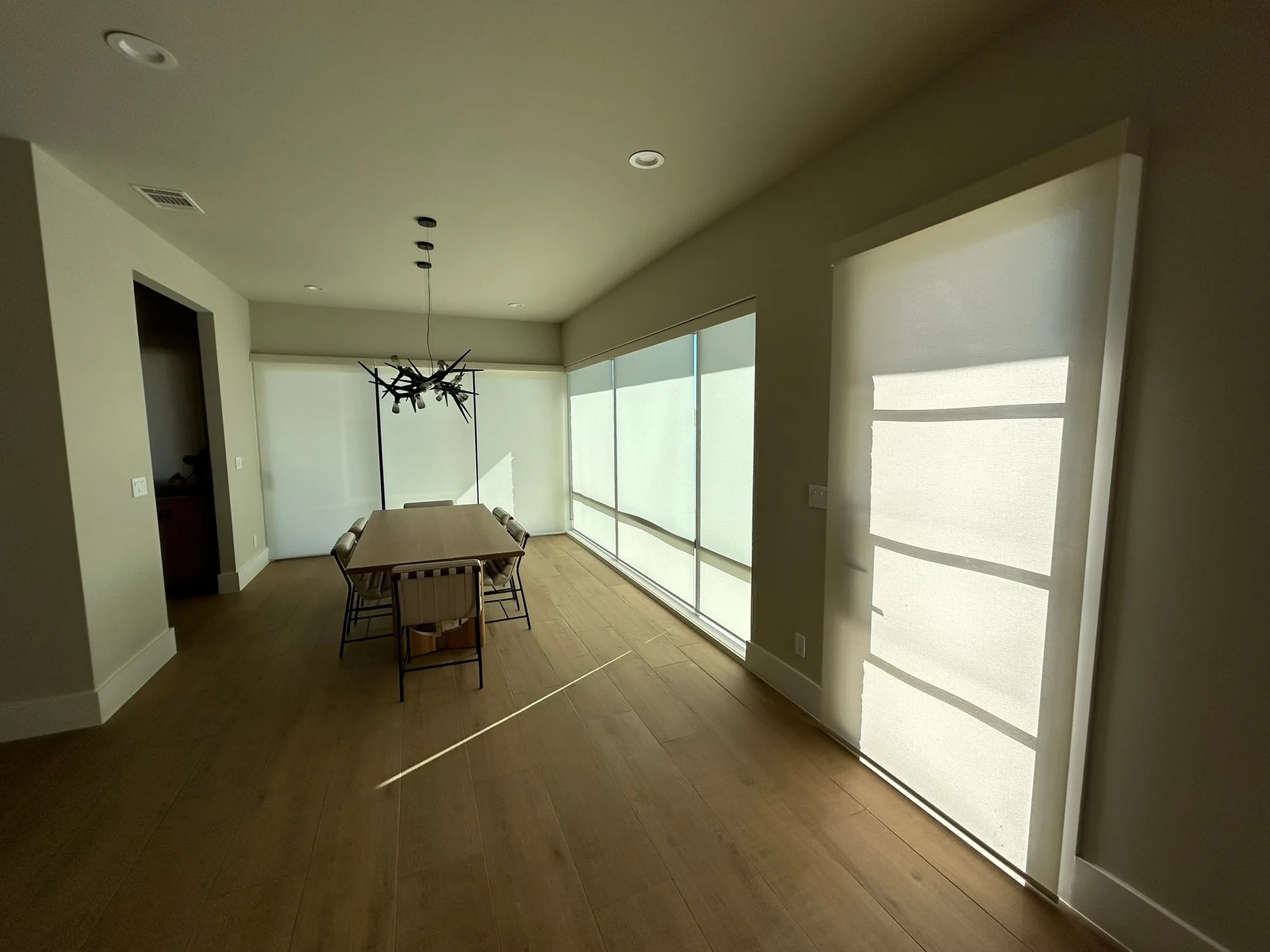
The short answer: yes, and they look great
Sliding glass doors are one of the most common problem spots I get asked about in Tucson homes. The glass is huge, it usually faces the patio, and the afternoon sun turns the whole room into a greenhouse. Vertical blinds used to be the default answer. Roller shades are now one of the best options for a slider, and they solve a few problems verticals never did.
A roller shade on a sliding door works exactly like a roller shade on a window. The fabric wraps around a tube mounted above the door and pulls down to cover the glass. The trick is in how you size and split the shade so the door still works like a door.
One wide shade or split panels
There are two common ways to cover a slider with roller shades.
- One wide shade: a single roller spans the full opening. This gives the cleanest look and the best light blockage, since there are no gaps between panels. The tradeoff is that you raise the whole shade to use the door.
- Split panels: two or three shades share the opening, each on its own roller. You can raise just the panel over the sliding side and leave the rest down. This keeps most of the glass covered while you go in and out.
Which one makes sense depends on how often you use the door. A slider that gets constant traffic to the patio usually wants split panels or a different treatment entirely. A slider that mostly acts as a big window does great with one wide shade.
Mount it high and outside the frame
Most sliding doors have little or no depth above the glass, so roller shades on sliders are almost always outside mounted. The bracket sits on the wall above the door frame, and the fabric hangs over the opening. Mounting the roller several inches above the frame does two things: the rolled-up fabric clears the doorway so nobody brushes against it, and the shade covers the full height of the glass with no light strip at the top.
Sizing matters more on a door than a window. The shade needs to clear the door handle, cover the glass edge to edge, and still leave the walkway open when raised. This is exactly the kind of measuring a professional install gets right the first time.
Pick the fabric for the job the door does
Sliders usually face a patio, which in Tucson means glare and heat for a good part of the day. Solar roller fabrics are the favorite here. They cut glare and UV while keeping your view of the yard, so the room stays bright without the burn. If the slider is in a bedroom or a media room, a blackout roller fabric turns all that glass dark.
One honest note on light filtering fabrics: because a slider shade is outside mounted, a little light will always sneak around the edges. If total darkness is the goal, tell us up front so we can plan the overlap and fabric correctly.
Motorization earns its keep on doors
A shade wide enough to cover a sliding door is heavy enough that a chain or cordless lift gets tiring fast. Motorized roller shades shine here. One press raises the whole opening, a schedule can drop the shade before the hottest part of the day, and there is no cord hanging near a busy doorway, which is safer with kids and pets. You can read more on our motorized window treatments page.
When something else beats a roller shade
Roller shades are not the only good answer for a slider, and sometimes they are not the best one.
- Panel track shades slide side to side like the door itself, so you never have to lift anything. They are the closest modern replacement for vertical blinds.
- Vertical blinds still work fine when budget is the priority and you want simple side to side operation.
- Drapery on a track gives a softer look and stacks fully clear of the opening.
The right pick comes down to how the door gets used, what the room needs, and what look you want. That is a five minute conversation in front of the actual door.
See the options on your own slider
Matt Diaz brings fabric samples to your home, measures the opening, and shows you exactly how a one piece shade, split panels, or a panel track would operate on your door. You see the fabrics in your own light before you decide anything.
Ready to fix that wall of hot glass? Reach out through our contact page or call (844) 936-2446 to book your free in-home consultation.