
The real question is time
Shutters or blinds is one of the most common matchups I get asked to referee, and the honest answer starts with a question back: how long do you plan to live with this decision? Blinds win on price today. Plantation shutters win on price per year of use. Almost everything else about the comparison flows from that.
What each one actually is
Blinds are horizontal slats on cords or a cordless lift, hung inside the window frame. Tilt the slats for light, raise the whole stack for the full view. Real wood, faux wood, and composite are the common materials.
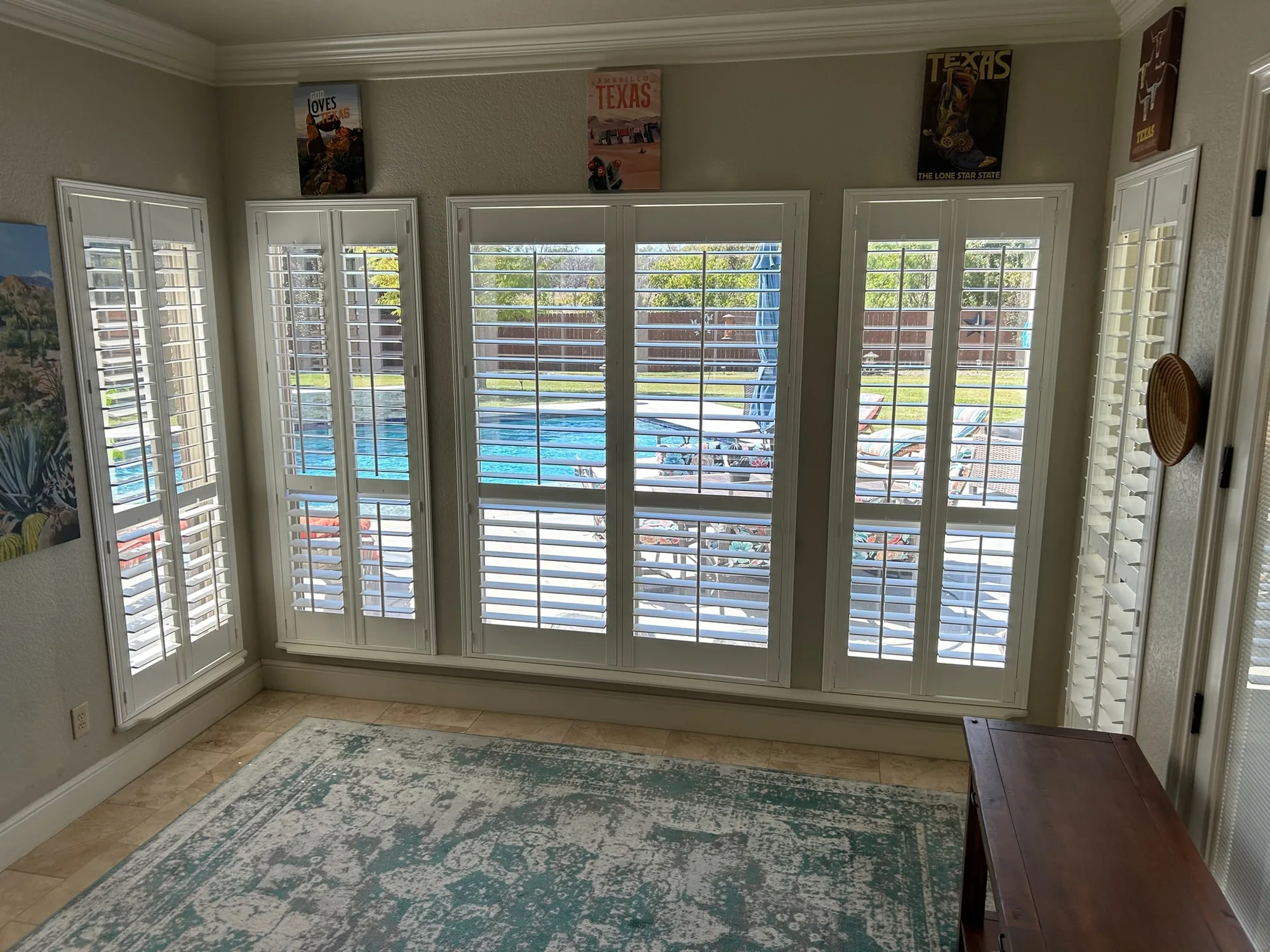
Plantation shutters are a piece of built-in furniture for your window: a solid frame mounted to the window opening with hinged panels of wide louvers inside it. They do not raise or lower. The panels swing open like little doors, and the louvers tilt for light control.
Cost: blinds win today, shutters win over the years
There is no way around it: quality blinds cost meaningfully less than shutters on the same window. If you are outfitting a whole house at once on a set budget, blinds or a mix of blinds and shades gets every window covered now.
The flip side is lifespan. Blinds live a hard life of cords, tilts, and daily handling, and most get replaced after some years of use. A well built shutter, properly installed, commonly outlasts several rounds of blinds. Many shutter manufacturers back that with limited lifetime warranties. Spread the cost over the years each product actually serves, and shutters are often the cheaper window covering you will ever buy.
Light control and privacy
Both tilt. The difference is the seal. Shutter louvers close against a solid frame, so a closed shutter blocks more light and view than closed blind slats, which always leak a little between slats and around the edges. For bedrooms and street facing rooms, shutters give you the more complete shutoff. Blinds counter with the full raise: pull them up and the window is completely open glass, something shutter panels only match when swung fully open into the room.
Durability in a desert
Tucson sun is hard on window treatments. Intense UV fades and embrittles cheap materials, and the dry heat warps others. Faux wood and composite blinds hold up well here; real wood blinds need more care on hot exposures. Quality shutters in composite or properly finished wood are the most sun-proof interior treatment we install, which is part of why they are so popular in Southern Arizona. Dust is the other desert reality, and wide shutter louvers wipe clean faster than a stack of narrow blind slats.
Looks and feel
This one is taste, but the pattern is consistent: shutters read as architecture, blinds read as window covering. Shutters suit the Southwest style beautifully, and we covered that in plantation shutters for Southwest and adobe style homes. Blinds keep a lower profile and come in more slat sizes and finishes for matching existing woodwork.
The quick decision guide
- Choose blinds when budget leads, you like changing looks every few years, or you want the window fully clear at times.
- Choose shutters when you plan to stay a while, want the best light seal and durability, and like a built-in look.
- Plenty of homes do both: shutters in the front rooms and main bedroom, blinds and shades elsewhere.
If you are weighing the two for your own windows, Matt Diaz brings samples of both, measures everything, and gives you the straight math for your home, not a sales pitch.
Ready to compare them in person? Reach out through our contact page or call (844) 936-2446 to book your free in-home consultation.